

Montesecondo: Silvio Messana's Natural Wines from Chianti Classico
Silvio Messana has a New York story, which is maybe why his wines feel at home on our shelves. Before he ever made a bottle, he was here working for an importer of small organic and biodynamic producers, tasting everything and meeting the people who made it. One of them visited his family's farm outside Florence and told him he should be making his own wine. He went home and did.
That farm is Montesecondo, and his Bianco just landed in the shop. If you've never had his wines, this is a good place to start.

Photo by Louis/Dressner of Silvio Messana
Who is Silvio Messana?
Silvio was born in Florence but grew up in Tunisia, where his family lived. His father bought Montesecondo in 1963 and planted vines, but for decades the grapes were sold to the local cooperative. Silvio studied engineering and economics, then went to Berklee in Boston because he wanted to be a jazz saxophonist. Wine came later, by way of that importer job in New York.
He moved back to Tuscany and bottled his first vintage in 2000. He had four tanks, no real winery, and made about 3,000 bottles.

Photo by Montesecondo showcasing the vinyard
Where Montesecondo is
The farm sits near Cerbaia, in San Casciano in Val di Pesa, right at the northern edge of Chianti Classico, just south of Florence. The main vineyard wraps around the house on the south side of a ravine, so it gets sun all day. The soil there is mostly heavy clay with galestro, the flaky rock Chianti is known for. Since 2013 Silvio has also farmed a rented vineyard about 18 km away at around 450 meters. It has more limestone and gives him crisper, sharper fruit than the warmer home site.
How he farms and makes wine
Silvio's early wines were made the conventional way, with commercial yeasts, added tannins and enzymes, and new barrels. In 2003 he went to a seminar by Nicolas Joly, one of the leaders of biodynamic farming, and in his words, threw out all his chemicals. He went organic that year and biodynamic in 2004. Since the 2003 vintage, every wine has fermented on its own wild yeasts.
He also changed how the vines grow. He replaced his father's wire-trained rows with alberello, where each vine stands alone like a small bush, which lets air move through the grapes in a humid valley. He plants cover crops between the rows and stopped trimming the tops of the vines.
In the cellar he uses steel, cement and clay amphorae. Only the Chianti Classico sees large old wood barrels, and nothing goes into small new oak. His amphora wines are called Tïn, the Arabic word for clay, a nod to the years in Tunisia.
One story we love: Silvio once made a Chianti in tank with no wood at all, and the Chianti Classico tasting panel rejected it twice, first for having too much color and then for having too little. He bottled it as a plain Tuscan red instead.
What just arrived: Montesecondo Bianco
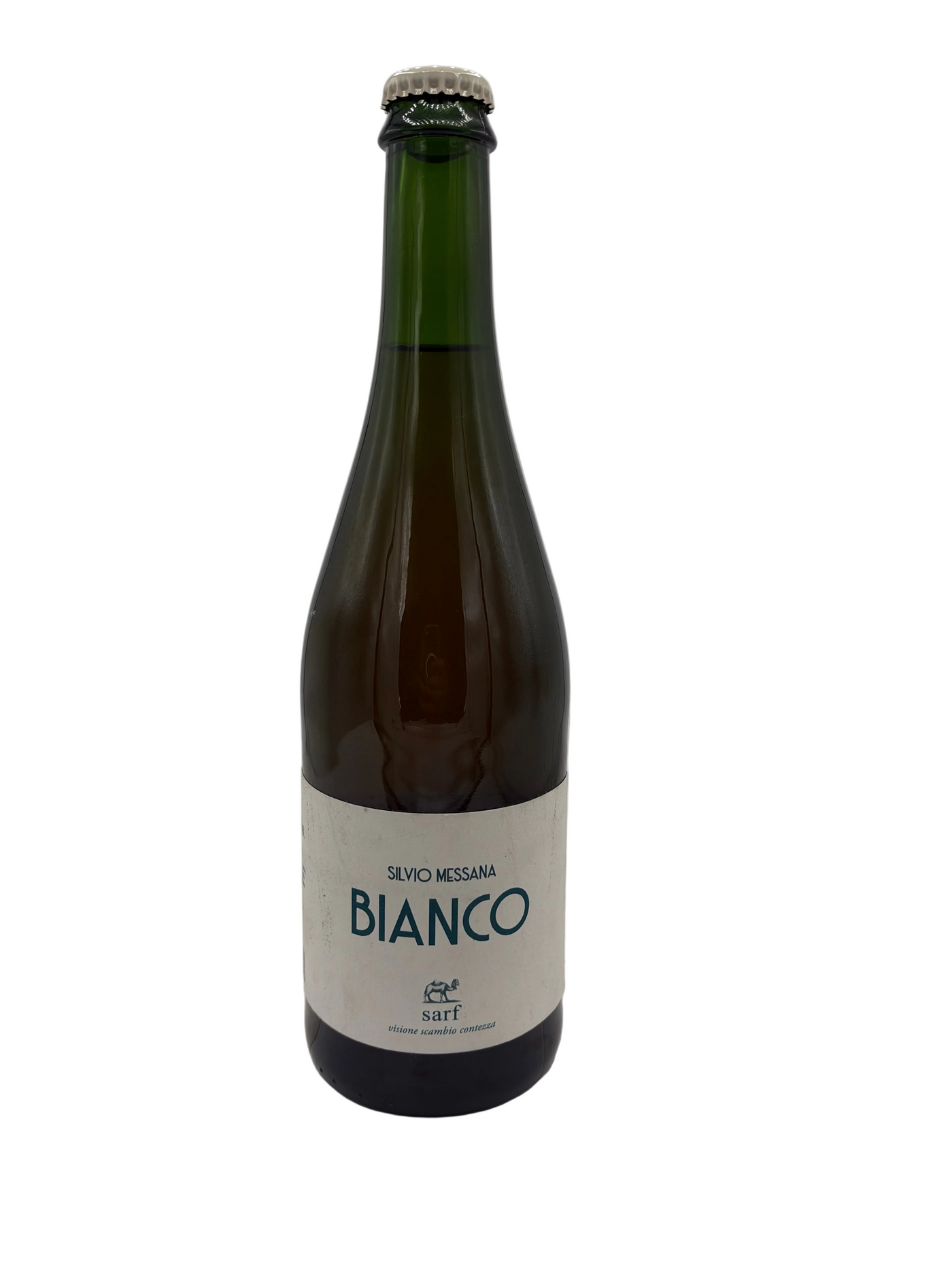
The Bianco is 100% Trebbiano from Silvio's biodynamic vines. Trebbiano is one of the most planted white grapes in Italy and usually ends up as something plain and forgettable. Here it gets the red-wine treatment: the grapes are destemmed and fermented on their skins in concrete with wild yeasts, then rested in concrete and bottled unfined and unfiltered with just a small dose of sulfur.
That time on the skins gives it a light amber color, a bit of grip and a gently bitter finish, like citrus pith or black tea. It isn't one of those heavy, tannic orange wines. It's light and easy, closer to a white you can drink all evening. It's labeled Vino da Tavola, Italy's plainest table-wine category, which is often where the most honest wines end up.
Drink it slightly chilled with roast chicken, pasta with greens, anything with a lot of herbs, or a plate of salumi and hard cheese.
Shop Montesecondo Bianco →
Montesecondo FAQ
Is Montesecondo a natural wine? Yes. Silvio farms biodynamically, ferments with wild yeasts only, and uses little or no sulfur. He has worked this way since 2003–2004.
Where is Montesecondo? Near Cerbaia in San Casciano in Val di Pesa, at the northern edge of the Chianti Classico zone, just south of Florence.
Is Montesecondo Bianco an orange wine? It's a skin-contact Trebbiano, so technically yes. It's light, though, with soft grip, a gentle bitter finish and none of the heaviness some orange wines have.
Where can I buy Montesecondo in NYC? At Wine Therapy, 171 Elizabeth St in Nolita, open seven days, or online for delivery and pickup.
Come try it
Stop by 171 Elizabeth St and ask us to open something from Montesecondo, or browse more orange wine and Italian white wine online. Get 5% off six bottles with code HALFCASE, or 10% off twelve with code CASE.


