

Chillable Reds: Your New Summer Go-To
Red wine doesn't have to sit at room temperature all summer. Some reds genuinely taste better cold, and a handful of the small producers we carry have basically built their whole style around that idea. Here's who's behind a few of our current chillable reds, and what you're actually getting once the bottle's cold.

Gulp Hablo, Castilla-La Mancha, Spain
Gulp Hablo started in 2021 as a project from the Parra family, three brothers named Francisco, Javier, and Luis, who farm organic and biodynamic vineyards near the town of Las Mesas. The idea was simple enough: make something easy, affordable, and honestly farmed, then put it in a big liter bottle instead of the usual 750ml so people would actually finish it at dinner instead of saving half for later. To get the winemaking right, they brought in Juan Antonio Ponce of Bodegas Ponce, a well known figure in Manchuela and something of a local expert on the native Bobal grape, even though Gulp Hablo itself leans on different varieties.
The fruit comes mostly from two vineyards, Entresendas, which sits in an old dried up riverbed, and Olla del Monte, known locally as Cuesta Colorá for its reddish, chalky soil. Everything ferments with native yeast and gets bottled with minimal sulfur. The whole project has stuck to its original idea pretty well, no pretension, just good, cheap, gulpable wine that happens to be biodynamic underneath a pretty ridiculous label.

Gulp Hablo Fresco - $18
Fresco leans on a much older Spanish tradition, planting red and white grapes together, fermenting them together, bottling the result as fresh as possible. This one's mostly Garnacha and Syrah with a good chunk of white grapes, Verdejo, Airén, Macabeo, mixed in, which keeps it lighter and juicier than a straight red would be. It comes in a can, which tells you exactly how seriously it wants to be taken. Pour it cold and don't overthink it.
SHOP GULP HABLO

Photo by Jenny & François
Christina Netzl, Göttlesbrunn, Carnuntum
She was five years old when she started helping out on the family farm. Studied wine management in London, came back in 2007, and eventually started her own label in 2015 that runs alongside her parents' more established wines, same building, two ranges. The estate's about 28 hectares, moved to certified organic starting in 2013.
Unfined, unfiltered, low sulfur, and built around letting the vineyard lead rather than sticking to a formula. Carnuntum's warm days and cool nights, thanks to the Danube nearby, happen to be about perfect for Zweigelt, which is the grape the whole region is known for.

Christina Netzl Kuhlbar Chillable Red 2024- $20
The name kind of gives it away. Juicy, easy, built on the estate's Zweigelt, made specifically to be served cold instead of at room temperature. Nothing complicated here, just a solid one to keep around all summer and not think too hard about.
SHOP CHRISTINA NETZL
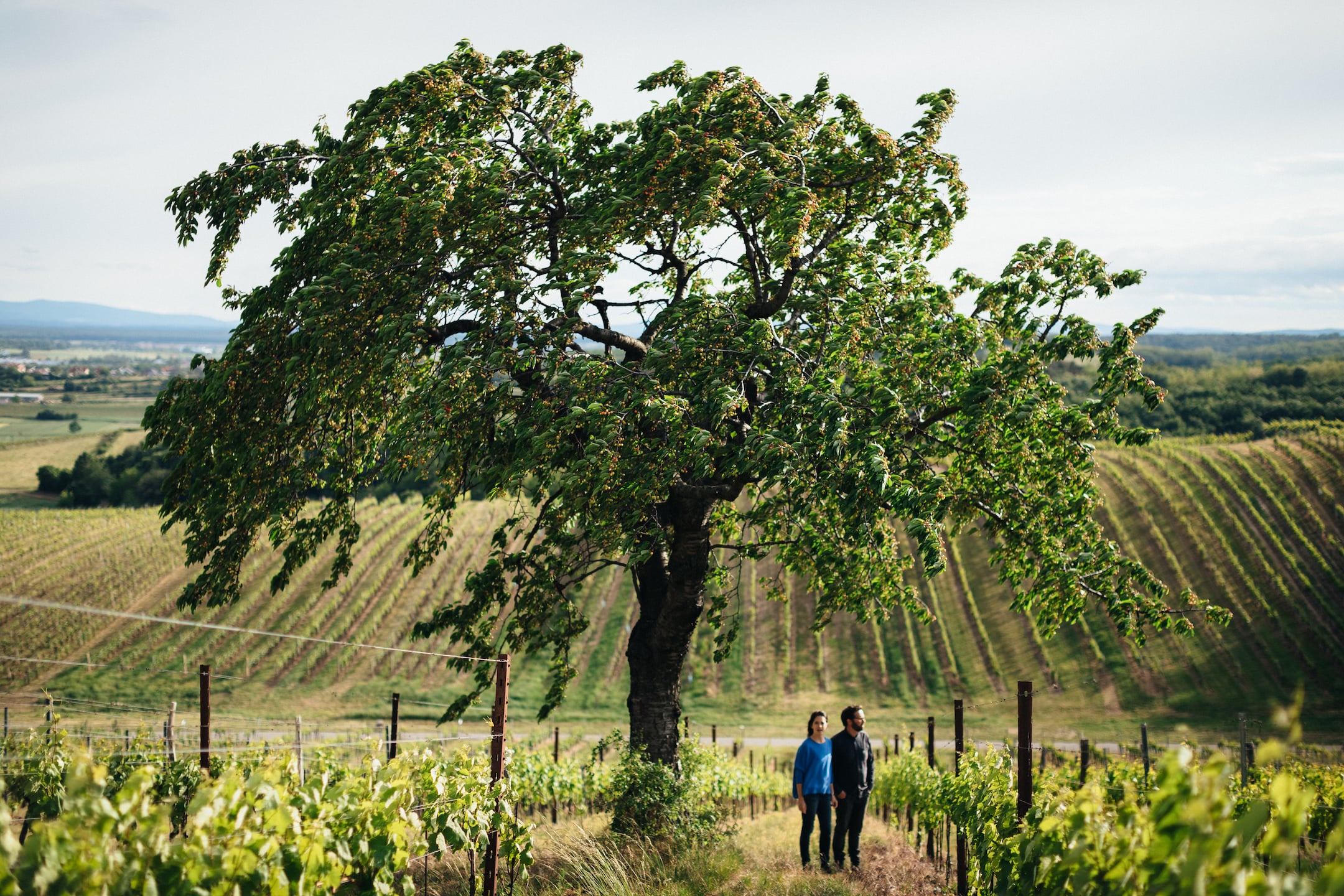
Photo by Weingut Weninger
Franz Weninger, Horitschon and Sopron
Weninger farms on both sides of a border, Horitschon in Austria's Burgenland and Balf, just over the line in Sopron, Hungary, a region that used to be part of Burgenland before the map got redrawn. Family's been making wine since the 1820s. Franz pushed the estate toward organic in 2005, biodynamic the year after, eventually landing Demeter certification.
Spontaneous fermentation, mostly unfiltered, minimal sulfur. Blaufränkisch, called Kékfrankos on the Hungarian side, is the main event, though there's also Zweigelt, Furmint, and a handful of other varieties scattered across dozens of small parcels.

Weninger Solidaritat Red 2024- $20
One of his easy, everyday reds, no fuss required. Same light, juicy style as his other casual bottlings. Pour it cold, no special occasion needed.
SHOP FRANZ WENINGER

Photo by Volker Wine Co
Claus Preisinger, Gols, Burgenland
Born in 1980, grew up in Gols on the north shore of Lake Neusiedl. Made his first wine at twenty, launched his own label at 22 after training at Klosterneuburg. By 24 he'd been invited into Pannobile, a small group of local winemakers who cared more about their own region than whatever was trendy elsewhere. In 2009 he built a new winery, low, modern, tucked right into the hillside above his vines, which if you've seen photos of it, is honestly a pretty striking building for a small Austrian town.
The vineyards, scattered across dozens of parcels near Gols, Weiden, and Mönchhof, have been farmed biodynamically since 2006, certified Respekt-Biodyn. No cultivated yeast, barely any added sulfur, a lot of aging in large wood casks or amphora instead of new oak. His site puts it simply: "wines for thinking people." A little cheeky, but not wrong.

Claus Preisinger Puszta Libre 2024 - $27
Puszta is named for the flat grassland around the lake, and it's his more relaxed, everyday line. This red is built to be poured without thinking too hard about it. Light tannin, easy going, the kind of bottle that just lives in your fridge door all season.
SHOP CLAUS PREISINGER
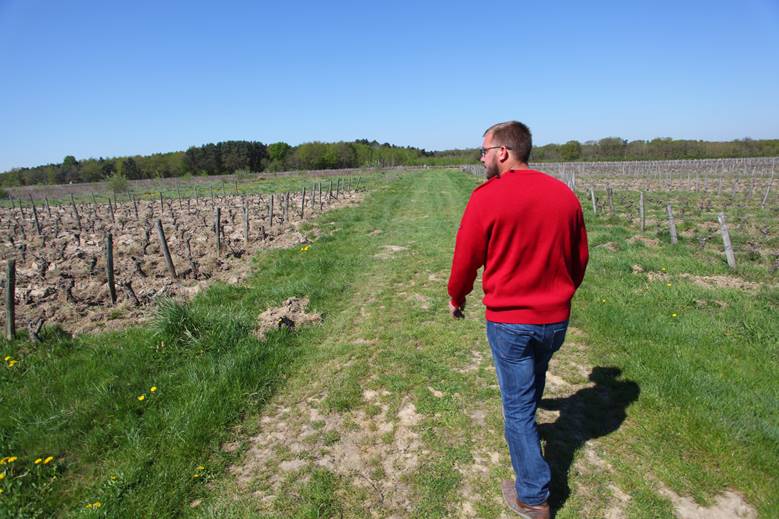
Photo by Racine Wine Imports
Pierre-Olivier Bonhomme, Loire Valley, France
Pierre-O, as everyone calls him, started out as a grape picker in 2004, working a harvest at Clos du Tue-Boeuf under Thierry Puzelat, one of the more respected names in natural Loire wine. He kept studying at the same time, finishing up at the Lycée Viticole d'Amboise in 2008, then stuck around to help Puzelat build a small négociant project called Puzelat-Bonhomme. By 2013 Thierry needed to step back and focus on his own family estate, so Pierre-O ended up running the whole thing solo, though he'd honestly already been making the wine himself since 2011.
These days he farms around nine hectares across a few communes in Touraine, Monthou-sur-Bièvre, Cellettes, and Valaire, working with a real grab bag of grapes: Gamay, Cabernet Franc, Chenin Blanc, Pineau d'Aunis, even a few nearly forgotten old Loire varieties like Menu Pineau. Farming's organic, fermentation's native yeast, and once the grapes hit the cellar he mostly just gets out of the way. His wines have a reputation for being joyful rather than serious, which tracks with pretty much everything else about how he works.

Le Telquel 2023- $29
Mostly Gamay with a splash of Pineau d'Aunis mixed in, grown on flinty soil, fermented in whole clusters with nothing added. It's rustic in the best sense, blackberry, rose, a bit of spice, crunchy fruit over some earthy undertones. Basically a bistro wine, unpretentious, made to be poured by the glass rather than saved for a special occasion. A slight chill only helps it.
SHOP PIERRE OLIVER BONHOMME

Photo by Occhipinti
Arianna Occhipinti, Vittoria, Sicily
Occhipinti released her first wine at 22. That's the headline everyone leads with, and fair enough, it's a good one. She grew up around wine through her uncle Giusto, of the well known COS estate, studied enology in Milan, then came home to Vittoria in southeastern Sicily and started with a single hectare. Twenty years later that's grown into roughly 40 hectares spread across several old vineyard districts, called contrade locally, mostly planted to Frappato and Nero d'Avola.
Everything's farmed biodynamically since 2009. In the cellar she keeps it simple on purpose: native yeast, barely any added sulfur, no fining, no filtration. She's one of the names people point to when they talk about what Sicilian natural wine can be, and Frappato in particular seems to be the grape she loves most.

Occhipinti Il Frappato Rosso 2024- $70
This is her pure Frappato bottling, and it's about as light as red wine gets while still being, unmistakably, red wine. Red berries, a floral lift, next to no tannin. That's exactly why it takes a serious chill so well. Not a wine for a formal dinner. More of a warm night, no real plan, pour it and see kind of wine.
SHOP ARIANNA OCCHIPINTI
A Quick Note on Serving
Most of these want to sit around 55 to 60 degrees, cooler than a normal red but warmer than a chilled white. Twenty to thirty minutes in the fridge usually does it. Come by and we'll point you toward whichever one fits what you already like drinking.
What to Pour Them With
These wines are food friendly almost by default. Grilled vegetables, a charcuterie board, lighter proteins like salmon or grilled chicken, all fine. Honestly they're just as good on their own too, on a porch somewhere, no food required.
Give One a Try This Summer
If you've never chilled a red, grab something light and low in tannin and see what happens. It's a small change that opens up a whole season for red wine drinkers who'd otherwise leave the bottle in the cabinet until fall. Come by and we'll point you toward whichever one fits what you already like drinking.


