

Pairing Natural Wine with Takeout

Photo by Le Coste Gradoli
Le Coste di Gradoli, Lazio, Italy
Gianmarco Antonuzzi grew up in Gradoli, a small town near Lake Bolsena in northern Lazio, and in 2004 he and his partner Clémentine Bouveron came back to farm a small, overgrown plot there. The idea was simple: work the volcanic land the way it would've been worked generations ago, before industrial vineyard practices took over. That first plot was three hectares. Today the estate is closer to fourteen, and it's not just vines, there are old olive groves, chestnut trees, and patches of oak woods mixed in among the rows.
Nothing here is certified biodynamic, but the copper and sulfur they use in the vineyard usually comes in well under what certification would even require. In the cellar, they let fermentation happen on its own, no added yeast, and the wines go into bottle unfined and unfiltered. They put it simply: the goal is to listen to the land rather than control it. Le Coste is one of the reasons drinkers started paying attention to Lazio at all, instead of just Tuscany or Piedmont.
Le Coste Litrozzo Bianco 1L
Litrozzo is the house white, a blend of Lazio's traditional grapes in a big one-liter bottle that's meant for the table, not a special occasion. It's a little rustic and totally unfussy, which is exactly what you want next to a mixed Chinese order, dumplings, scallion pancakes, fried rice, the works. The acidity and light grip keep up with the garlic and soy without stealing focus.

Le Coste Bianchetto
Bianchetto gets some skin contact, so it has more color and more texture than the Litrozzo. That extra structure is useful with spicier food, like Indian takeout, paneer curry or tandoori chicken especially, since the wine's grip can actually stand up to the heat instead of just getting steamrolled by it.

Le Coste Litrozzo Rosso 2023 1L
The red Litrozzo is the same idea as the white: big bottle, low fuss, meant to be poured freely. It's light enough to chill a bit and has enough brightness to sit next to red sauce without turning heavy, so pizza, a meatball sub, baked ziti, anything like that works.

Le Coste Pizzicante Rosato NV
This is Le Coste's pét-nat, bottled before fermentation finishes so it keeps a bit of natural fizz. It's lively, a little cloudy, and has the acidity to cut through richer food. Try it with sushi or a poke bowl. The bubbles reset your palate between bites of rice and raw fish.
SHOP LE COSTE
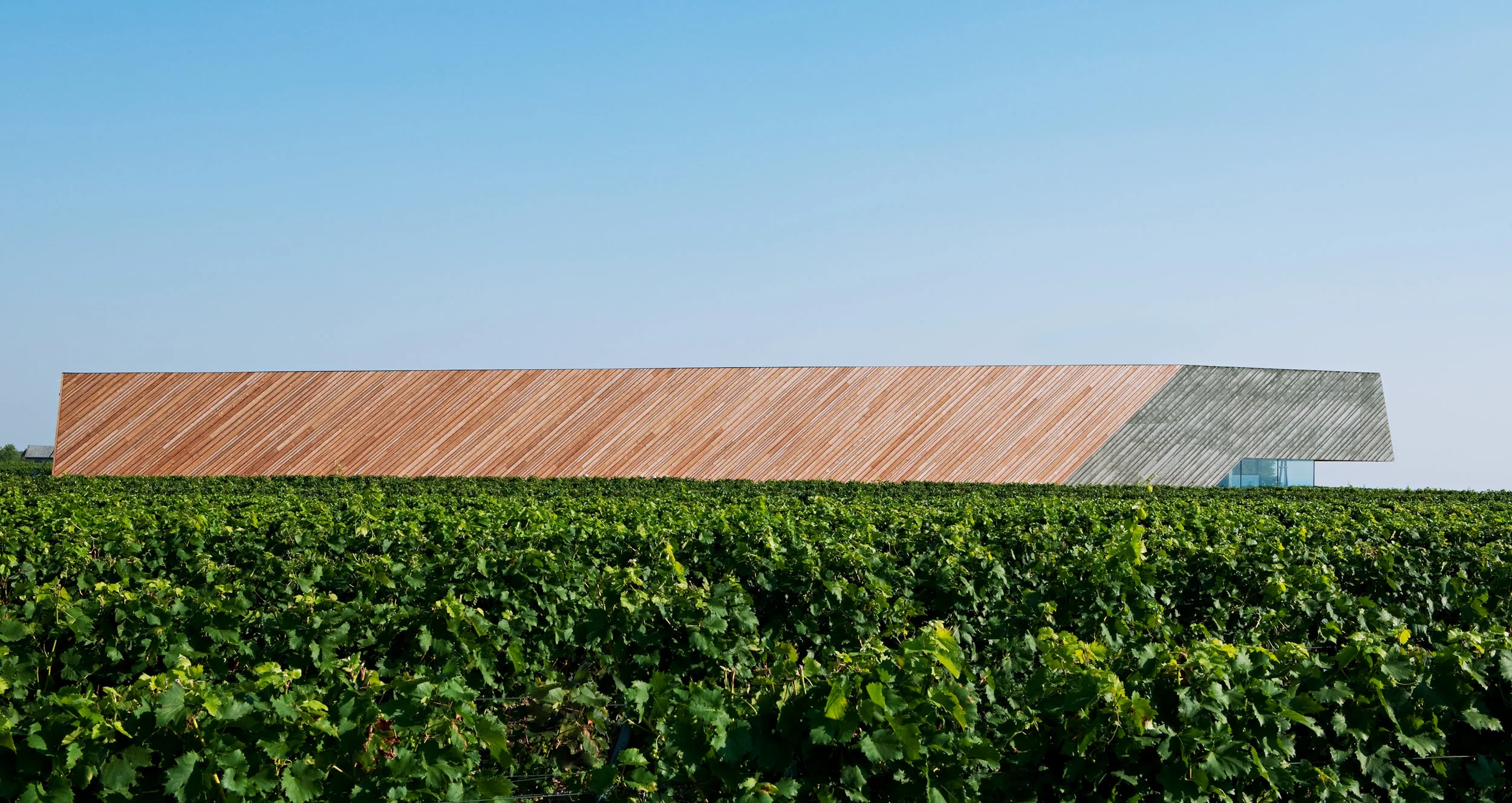
Photo of Claus Presigner Vineyard by Volker Wine Co.
Claus Preisinger, Burgenland, Austria
Claus Preisinger was born in 1980 and grew up in Gols, right on the northern shore of Lake Neusiedl in Burgenland. He made his first wine at twenty, working with his father, then launched his own label in 2002 after training at the viticultural school in Klosterneuburg. By twenty-four he'd already been invited into Pannobile, a small group of local winemakers who cared more about reflecting their region than following whatever was trendy elsewhere. In 2009 he built a new winery, low and modern, tucked right into the landscape above his vines.
The vineyards are scattered across dozens of small parcels near Gols, Weiden, and Mönchhof, and they've been farmed biodynamically since 2006, with Respekt-Biodyn certification to back it up. No cultivated yeast in the cellar, barely any added sulfur, and a lot of the wine ages in large wood casks or amphora instead of new oak. His own words, sum it up with a tagline: "wines for thinking people."

Claus Preisinger Puszta Blanca 2024
Puszta is Preisinger's more casual line, named for the flat grassland around the lake. This one's an orange wine, some skin contact grip, a savory edge that works really well with German or Austrian comfort food. Spaetzle, currywurst, a bowl of soup on a cold night, the wine's slight bitterness balances all of that out nicely.

Claus Preisinger Puszta Libre 2024
The red side of Puszta, built to be poured without thinking too hard about it. There's enough fruit and light tannin here to go with a lot of things, but it's especially good with tacos, or really any Mexican order, since the wine's brightness plays well against lime and a bit of char.
SHOP CLAUS PREISINGER
Oyster River Winegrowers, Warren, Maine
Brian Smith started Oyster River Winegrowers in 2007 on a small farm in Warren, Maine. He trained in winemaking at Fresno State, but the way he actually works leans a lot closer to pre-industrial than modern, more about staying out of the wine's way than steering it. For the first seven seasons, the vineyards were worked entirely by draft horses, Fred and Don, before the farm switched to regular equipment in 2017 just to keep up with how much people wanted the wine.
They farm their own vineyards and orchards organically, and round that out with fruit bought from other growers around the Northeast. Fermentations start on their own with wild yeast and can run for months, and the sparkling wines and ciders go into bottle with no added sulfites and no filtration. Their site, Oyster River runs with the line "wild fermented and unfiltered since 2007," These wines as a solid way into East Coast natural winemaking.

Oyster River Morphos PetNat White 2024
Morphos is the flagship here, a blend of Cayuga White and Seyval Blanc from New York's Finger Lakes. It's been around since 2012 and it's still their best seller for a reason: dry, cloudy, full of natural fizz. Pour it with fried food, fresh oysters, whatever casual seafood takeout you've got going. The acidity cuts through grease without any effort.

Oyster River Morphos Pet Nat Rose 2023
Same low-intervention method as the white, just with red grapes in the mix, so you get a bit more fruit alongside that same bright, zippy character. Good with tacos or a Mexican order in general, the acidity and light fizz hold their own against lime and char.


